Industrial Sheet Metal Fabrication in Columbus, Ohio: What Facility Managers and Plant Engineers Need to Know
Manufacturing facilities, processing plants, and warehouses across Central Ohio depend on custom-fabricated metal components that off-the-shelf suppliers simply don’t carry. When a conveyor system needs a custom guard, a processing line requires a specialty enclosure, or a ventilation system demands non-standard ductwork, facility managers and plant engineers turn to industrial sheet metal fabrication in Columbus, Ohio.
At The Sheet Metal Shop, we’ve spent over 50 years building the industrial components that keep Central Ohio’s facilities running. Our in-house CNC equipment, experienced fabricators, and no-outsourcing approach mean your parts are built right, built locally, and delivered on your timeline — not a distributor’s.
What Industrial Sheet Metal Fabrication Actually Covers
Industrial fabrication is a broad term, and it’s worth defining what falls under this umbrella. Unlike residential or light commercial work, industrial sheet metal fabrication involves components designed for demanding environments — high temperatures, corrosive chemicals, heavy mechanical loads, or strict regulatory requirements.
Common industrial fabrication projects include:
- Equipment guards and safety enclosures — OSHA-compliant machine guards, belt guards, and protective barriers fabricated to fit specific equipment footprints
- Process ventilation and exhaust ductwork — custom runs for dust collection, fume extraction, and process air handling that standard catalog sizes can’t accommodate
- Electrical and control panel enclosures — weather-rated or NEMA-rated housings for electrical panels, junction boxes, and control systems
- Structural supports and brackets — mounting frames, equipment bases, and support structures designed to handle specific load requirements
- Chutes, hoppers, and conveyor components — material handling components sized to your exact process specifications
- Access panels and maintenance platforms — removable panels and walkway components that simplify equipment access during shutdowns
Why Custom Fabrication Beats Catalog Components in Industrial Settings
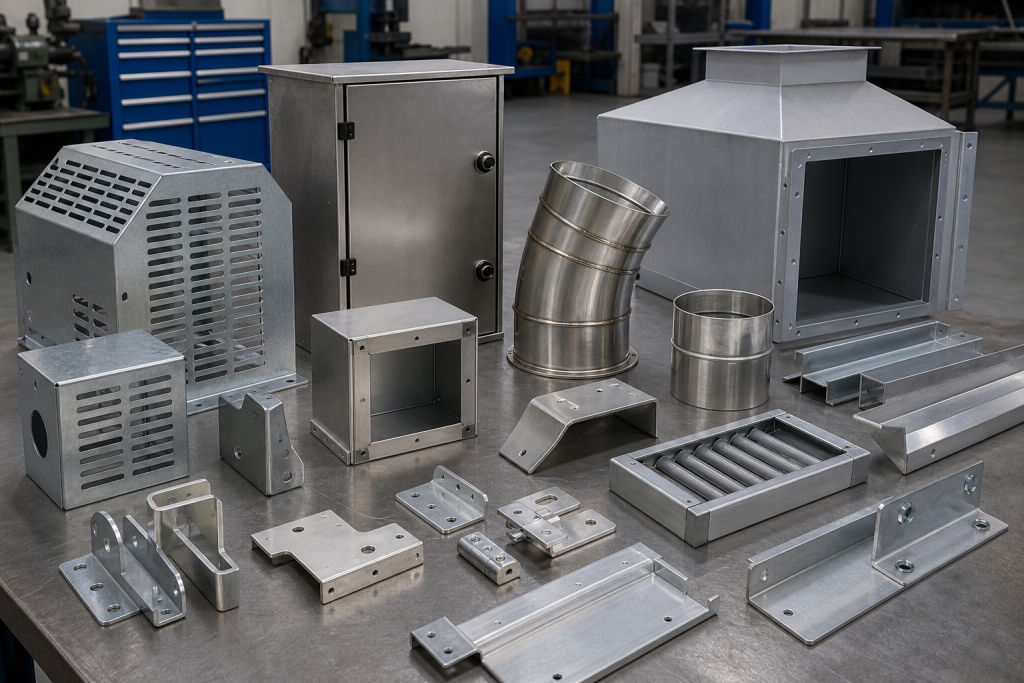
Facility managers who’ve tried to make catalog components work in industrial applications know the frustration: the guard doesn’t quite fit the machine, the enclosure is three inches too wide for the available space, or the ductwork transition piece doesn’t exist in any supplier’s catalog.
Custom industrial sheet metal fabrication solves these problems at the source. When we fabricate a component for your facility, we work from your specifications — whether that’s a full engineering drawing or a napkin sketch with critical dimensions. The result is a part that fits your application the first time, without the shimming, trimming, and field modifications that waste your maintenance team’s time.
There’s also a cost consideration that isn’t always obvious. A catalog enclosure that costs $400 but requires $600 in labor to modify and install isn’t actually cheaper than a custom-fabricated enclosure built to your exact dimensions for $700. Factor in the downtime during installation, and custom fabrication frequently comes out ahead on total project cost.
Materials for Industrial Applications
Material selection in industrial fabrication isn’t one-size-fits-all. The right material depends on the environment, the application, and sometimes the regulatory framework your facility operates under.
Galvanized steel remains the workhorse for most industrial applications — equipment guards, general-purpose enclosures, structural brackets, and standard ventilation ductwork. It offers solid corrosion resistance at a reasonable cost and welds cleanly.
Stainless steel (304 and 316 grades) is the standard for food processing facilities, pharmaceutical manufacturing, and any application where corrosion resistance is critical. Grade 316 adds molybdenum for resistance to chlorides and chemical exposure — essential in chemical processing or coastal environments. If you’re operating under FDA, USDA, or 3-A sanitary standards, stainless is typically mandatory.
Aluminum finds its place where weight matters. Overhead guards, portable enclosures, and components that maintenance teams need to remove and reinstall regularly benefit from aluminum’s strength-to-weight ratio. It’s also naturally corrosion-resistant, making it a practical choice for outdoor installations and wet environments.
Carbon steel handles the heaviest structural applications — equipment bases, heavy-duty brackets, and load-bearing supports where maximum strength is the priority. It requires coating or painting for corrosion protection, but for indoor structural applications, it’s often the most cost-effective option.
At The Sheet Metal Shop, we fabricate with all four material families and can advise on the best fit for your specific application and budget.
CNC Precision in Industrial Fabrication
Industrial components often demand tighter tolerances than general sheet metal work. An equipment guard that’s a quarter-inch off might not mount properly. An enclosure that’s out of square won’t seal against dust or moisture. A ductwork transition that doesn’t match the existing system creates leaks that compromise your ventilation performance.
Our CNC cutting and forming equipment eliminates the variability that comes with manual layout and cutting. When you need 50 identical brackets or a single complex enclosure, our CNC process ensures each piece matches the specification. That consistency matters when components need to be interchangeable across multiple machines on a production line, or when a replacement part needs to drop into the same mounting points five years from now.
CNC fabrication also accelerates turnaround on repeat orders. Once we’ve programmed a part, reordering is straightforward — same specifications, same tolerances, same fit. For facilities that consume fabricated components regularly, this repeatability is a significant operational advantage.
How Columbus-Area Facilities Work With Us
The process for industrial fabrication projects is straightforward, whether you’re a plant engineer specifying a one-off component or a facility manager planning a scheduled maintenance turnaround.
Step 1: Specification review. You provide drawings, dimensions, or a description of what you need. If you have CAD files, we can work directly from those. If you have a failed component you need replicated, bring it in — we’ll measure and reverse-engineer the fabrication specifications.
Step 2: Material and method recommendation. Based on your application, environment, and budget, we recommend the appropriate material and fabrication approach. If you’ve spec’d 316 stainless but your application only requires galvanized, we’ll tell you — we’d rather give you honest guidance than overbuild at your expense.
Step 3: Fabrication. Everything is cut, formed, welded, and finished in our Columbus shop. No outsourcing, no waiting on a subcontractor’s schedule. For time-sensitive projects — emergency repairs, scheduled shutdowns, or production-line-down situations — our in-house capability means we control the timeline.
Step 4: Delivery or pickup. We deliver to facilities throughout the Columbus metro area and Central Ohio. For ongoing relationships, we can coordinate delivery schedules around your maintenance windows.
Planned Maintenance vs. Emergency Fabrication
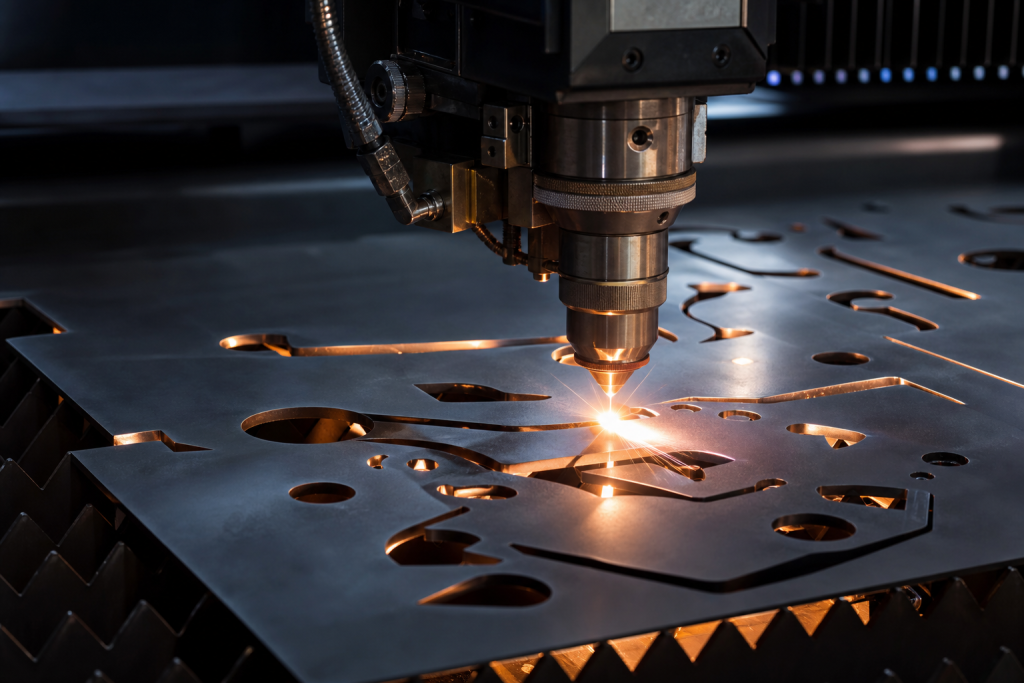
The ideal scenario is planned fabrication — you identify upcoming needs during scheduled maintenance, provide specifications with lead time, and we fabricate and deliver before your next shutdown window. This approach gives us time to optimize material usage, batch similar components, and deliver the best price.
But industrial facilities don’t always operate on ideal timelines. Equipment fails, inspections uncover issues, and production demands change. When you need a replacement guard by tomorrow morning or a custom enclosure fabricated over a weekend, a local fabrication shop with in-house CNC capability is the difference between hours of downtime and days of waiting for a shipped component.
The Sheet Metal Shop has handled emergency turnarounds for Columbus-area facilities for decades. Our proximity, combined with the fact that we don’t outsource any fabrication steps, means we can respond to urgent requests faster than any remote supplier.
When to Call a Fabrication Shop vs. a Supplier
Not every industrial metal component needs custom fabrication. Standard conduit fittings, off-the-shelf junction boxes, and catalog ductwork that matches your system specifications can and should be purchased from distributors — that’s what they’re for.
Custom fabrication makes sense when:
- Standard sizes don’t fit your space constraints or equipment dimensions
- Your application requires non-standard material gauges, finishes, or configurations
- Regulatory requirements demand specific fabrication standards or material certifications
- You need components that match existing custom infrastructure
- Lead times from national suppliers don’t align with your project schedule
- You’re replacing a legacy component that’s no longer commercially available
If you’re unsure whether your project calls for custom fabrication or a catalog component, call us. We’ll give you an honest assessment — and if a catalog part will do the job, we’ll say so.
Get a Quote for Your Industrial Fabrication Project
The Sheet Metal Shop serves manufacturing facilities, processing plants, warehouses, and industrial operations throughout Columbus and Central Ohio. With over 50 years of fabrication experience, in-house CNC equipment, and a team that understands industrial applications, we deliver the components your facility needs — on spec and on schedule.
Contact us for a quote on your next industrial fabrication project. Call our Columbus shop directly or visit sheetmetalshopcolumbus.com to get started.