
CNC Plasma Cutting Services in Columbus, Ohio: What Contractors and Fabricators Need to Know
Contractors and fabricators across the Columbus and Central Ohio area rely on CNC plasma cutting services to turn plate metal into finished parts. The process is fast, accurate, and cost-effective for the thicknesses that is most often used in commercial and industrial metal fabrication. This guide covers how it works, what it can cut, and how to spec a job.
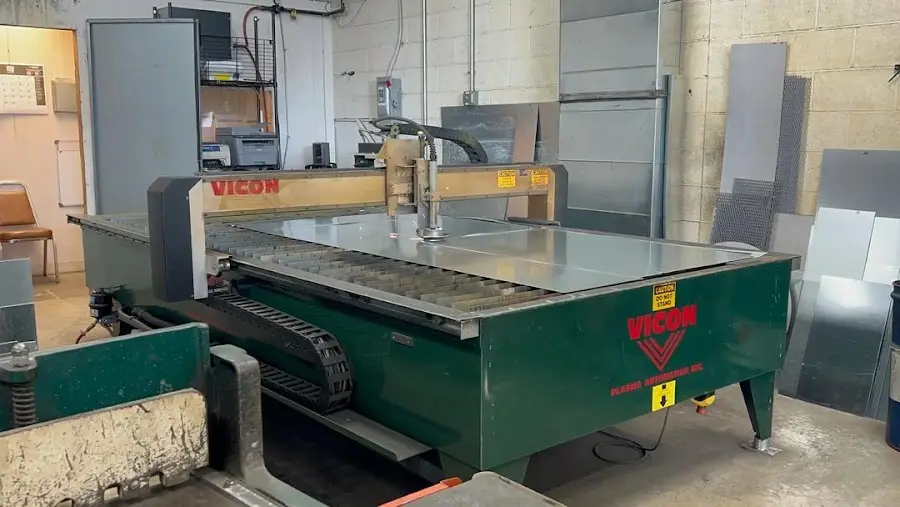
How CNC Plasma Cutting Works
Plasma cutting uses an electrical arc and a jet of ionized gas to melt through conductive metal. According to Lincoln Electric, the plasma jet reaches temperatures up to 40,000°F. That arc is forced through a narrow copper nozzle, which concentrates it into a focused column. The column melts the metal in its path while a gas jet clears the molten material from the kerf.
On a CNC table, the torch mounts to a motorized gantry that moves on X and Y axes. A CNC controller reads G-code from your CAD files and drives the torch along the cut path. Nesting software then arranges your parts on a single sheet or plate to reduce scrap. The CNC machines run through the entire nest with no manual repositioning between cuts.
Modern tables also include automatic torch height control. The Fabricator reports that high-precision systems adjust standoff in 0.1-volt increments with a resolution of ±0.02 volts. That keeps cut quality even across the full sheet, even on plate that is not flat. The result is consistent parts whether you are handling sheets of 16-gauge or half-inch plate.
What Materials and Thicknesses CNC Plasma Cutting Handles
Plasma cuts any electrically conductive metal. For the materials most common in Central Ohio metal fabrication work, here is what the process handles:
- Mild and carbon steel. The most common application. CNC plasma cuts mild steel from about 18-gauge sheet up through 2-inch plate. Fabricating & Metalworking notes that the quality sweet spot on carbon steel runs from 0.040 inches to 1.25 inches thick.
- Stainless steel. Effective up to roughly 1.75 inches for production piercing. Stainless needs different shield gas mixes (often argon-based) for clean edges and good cut quality.
- Aluminum. Production pierce up to about 1.5 inches. Plasma is faster than waterjet on aluminum and avoids the problems that laser has on thicker sections.
For tolerances, standard CNC plasma holds ±0.015 to ±0.030 inches. High-definition systems go tighter. The Fabricator reports accuracy of ±0.01 to 0.05 inches and kerf widths as narrow as 0.05 inches on quarter-inch steel. Those numbers matter when parts need to fit a weldment or bolt-up assembly without grinding.
Common Applications for CNC Plasma Cutting in Columbus
Contractors, facility managers, and OEMs across Columbus and Southern Ohio use CNC plasma cutting and welding across a wide range of custom metal projects. Here are the jobs we see most often in our shop:
Structural supports and brackets. Gussets, base plates, and connection plates cut from carbon steel or stainless plate. Plasma is faster and cheaper than laser for these parts, especially on material over half an inch thick.
HVAC ductwork components. Flanges, transitions, and flat-pattern blanks for rectangular and spiral duct systems. Hypertherm notes that HVAC contractors use plasma for ductwork, supports, brackets, gussets, and flanges. A 40 to 55-amp air plasma system can cut 24-gauge galvanized at several hundred inches per minute.
Equipment guards and enclosures. Perforated panels, access doors, and guards for industrial equipment. Plasma handles the straight cuts and larger radii these parts need without waterjet setup time.
Custom metal signs and decorative panels. Architectural signage and wall art cut from steel or aluminum plate. CNC precision means the same file cuts the same way whether you need one piece or fifty.
OEM and replacement parts. When a machine part breaks and the manufacturer quotes weeks, a local machine shop can cut a replacement from plate stock. Simple profiles often ship same-day.
Tube cutting and notching. Plasma also handles round and square tube work for handrails, frames, and structural assemblies when paired with rotary fixtures. Note that plasma is not capable of cutting plastics or other non-conductive materials, so it works only on metals.
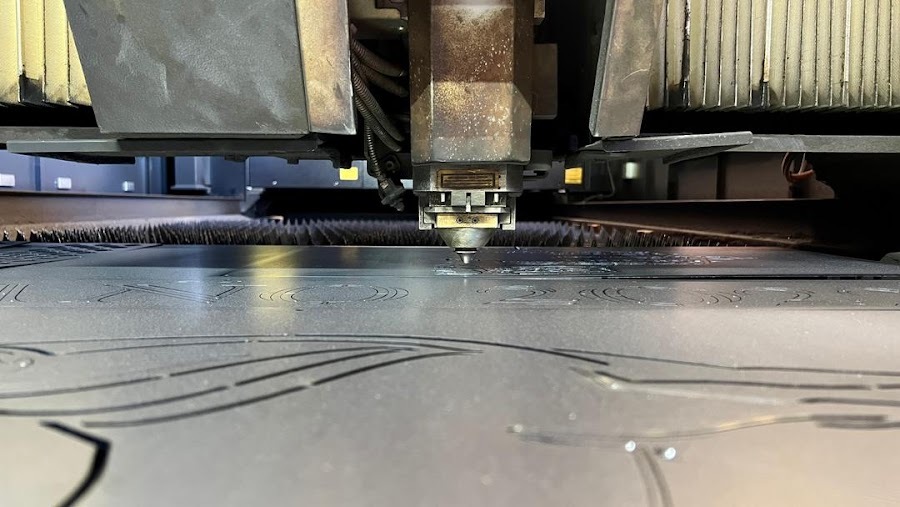
CNC Plasma vs. Laser Cutting vs. Waterjet: When to Specify Which
Each cutting method has a range where it is the best choice. Here is a quick comparison:
| Factor | CNC Plasma | Laser | Waterjet |
|---|---|---|---|
| Best thickness range | 10-ga to 2 in. | Up to ~0.75 in. | Up to 6+ in. |
| Typical tolerance | ±0.015–0.030 in. | ±0.005–0.010 in. | ±0.005–0.010 in. |
| Speed on 0.5-in. steel | Fast | Moderate | Slow |
| Heat-affected zone | Moderate | Small | None |
| Cost per cut inch | Low | Moderate | High |
Choose plasma when your material is thicker than 10 gauge, your tolerances allow ±0.015 inches, and you need parts fast. Plasma runs at speeds that laser and waterjet cannot match on thick stock. The cost per cut inch is the lowest of the three methods.
Choose laser when you need tight tolerances on thin sheet metal. Brackets, enclosures, and panels where edge finish matters most are laser jobs.
Choose waterjet when the part cannot take any heat. Heat-treated alloys, composites, glass, and other non-conductive or heat-sensitive materials call for waterjet.
Many projects combine methods. A contractor might spec plasma for half-inch base plates and laser for 16-gauge enclosure panels, both from the same shop.

Why Local CNC Plasma Cutting Matters
Online cutting services work for simple, non-urgent parts. Columbus contractors usually deal with tight timelines, mid-project changes, and parts that have to fit existing conditions, which is where a local shop pays off.
Fast turnaround. A local shop can cut parts same-day or next-day. Online services quote five to ten business days before shipping. When you need transition fittings for a duct run that was field-measured yesterday, that lead time does not work.
One-roof fabrication. Plasma cutting is often one step in a larger sequence of cutting, welding, forming, and finishing. When all of that happens under the same roof, parts move from the CNC table to the press brake or weld station with no shipping delay. In our shop, plasma-cut parts go straight into forming and welding with no handoff gap.
Field problem-solving. Drawings and field conditions often differ. A local shop can adjust files and re-cut fast, without the overhead of re-quoting through an online portal. That flexibility saves days on projects where CNC machining or rework would otherwise slow things down.
How to Spec a CNC Plasma Cutting Job
Sending work to a plasma cutting shop for the first time? Include this for a fast, accurate quote:
- File format. Send a DXF or DWG of the part profile. PDF drawings work but add time for the shop to trace the geometry. A flat pattern layout is ideal.
- Material and thickness. Name the alloy or grade. “Stainless steel” is not enough. 304 stainless, A36 carbon steel, and 5052 aluminum each cut differently and cost differently.
- Quantity. Even one piece is fine. Setup time on CNC plasma is minimal once the file is nested.
- Tolerances. Standard ±0.015 to ±0.030 inches covers most structural and HVAC work. Tighter specs may call for laser or post-cut machining on critical features.
- Secondary operations. Will the parts need bending, welding, drilling, or finishing? Knowing this upfront lets the shop plan the full workflow.
- Timeline. Rush jobs are possible. Planning ahead lets the shop nest your parts with other work, which can lower your per-piece cost.
Get Your Parts Cut Faster in Columbus
We provide CNC plasma cutting services for contractors, facility managers, engineers, and manufacturers across the Columbus, Ohio metro area. With in-house cutting, forming, welding, and finishing, your project goes from flat plate to finished part under one roof. That means faster turnaround, tighter quality control, and fewer delays from shipping parts between vendors.
Whether you need structural brackets from carbon steel plate, HVAC components from galvanized sheet, or custom aluminum parts, we are ready to cut.
Get in touch or visit sheetmetalshopcolumbus.com for a quote. In-house cutting and forming means your parts arrive ready to install.
Frequently Asked Questions
How thick can CNC plasma cut?
CNC plasma cuts mild steel from about 18-gauge sheet up through 2-inch plate, stainless to roughly 1.75 inches, and aluminum to about 1.5 inches for production piercing.
What tolerance does CNC plasma cutting hold?
Standard CNC plasma holds ±0.015 to ±0.030 inches. High-definition systems reach ±0.01 to 0.05 inches with kerf widths as narrow as 0.05 inches on quarter-inch steel.
Should I use plasma, laser, or waterjet?
Use plasma on material thicker than 10 gauge when ±0.015 inches is close enough and you need parts fast. Use laser for tight tolerances on thin sheet. Use waterjet when the part cannot take any heat.
What file format do you need for a plasma cutting quote?
Send a DXF or DWG of the part profile, plus the alloy or grade, thickness, quantity, tolerance, and any secondary operations. PDF drawings work but add tracing time.
Can you cut a single piece?
Yes. Setup time on CNC plasma is minimal once the file is nested, so one-off parts and small runs are both worth quoting.