Aluminum Welding in Columbus, Ohio: What Makes It Different and Why Your Shop Matters
Aluminum has been showing up on more and more project specs lately. It is lighter than steel, resists corrosion without paint, and looks clean in exposed applications. But welding aluminum is not the same as welding steel. The difference between a shop that does it well and one that just wings it is obvious.
This guide is for contractors, facility managers, and engineers specifying aluminum welding in Columbus, Ohio. It covers why the process is more difficult, which techniques matter, and how to pick the right shop for the job.
Why Aluminum Welding Demands More Skill Than Steel
Aluminum has a reputation as a difficult welding material, primarily due to these three properties.
The oxide layer. Aluminum forms a thin oxide skin almost instantly in air. That oxide melts at roughly 3,700°F. The aluminum beneath it melts at only about 1,200°F. The base metal can actually boil (around 2,880°F) before the oxide melts. If the oxide is not broken up during welding, it sinks into the weld pool. The result is porosity and weak joints. Turning up the heat alone does not fix this.
High thermal conductivity. Aluminum moves heat about five times faster than carbon steel. At the start of a weld, the metal around the joint pulls heat away fast. You need high current to get going. As the piece warms up, you have to dial the current back or risk burn-through and warping. This back-and-forth takes real hands-on skill.
No color change before melting. Steel glows red, then orange, then white as it heats up. Aluminum does not change color at all. It goes from solid to liquid with almost no warning. Managing heat on aluminum is a skill you build by doing the work.
Sources: Lincoln Electric, “TIG Welding Aluminum”; Westermans International, “Aluminium Welding Guide: TIG & MIG Explained.”
TIG vs. MIG: Picking the Right Aluminum Welding Process
Two processes handle most aluminum welding in a fabrication shop: TIG (GTAW) and MIG (GMAW).
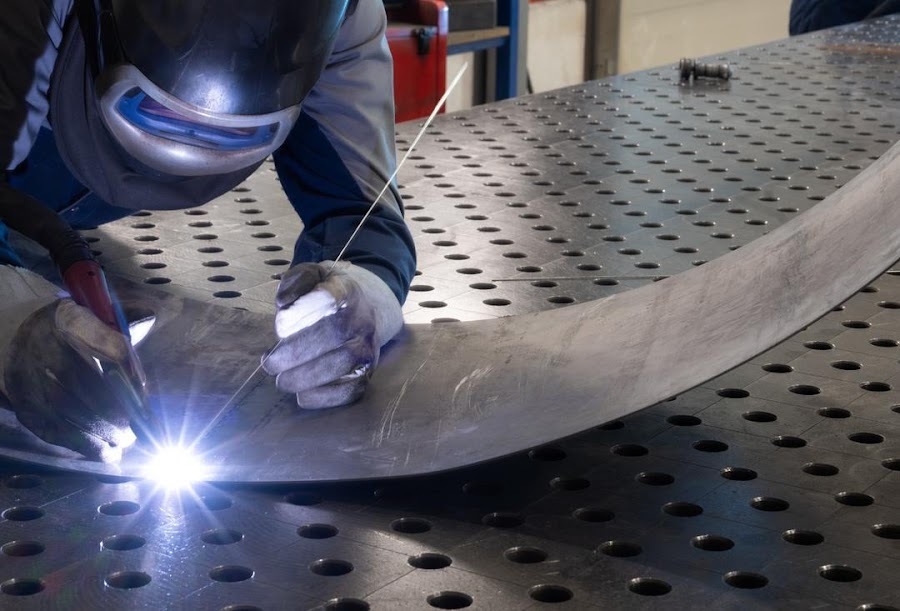
TIG welding is the go-to for precision aluminum work. It uses a tungsten electrode, a filler rod fed by hand, and 100% argon shielding gas. AC polarity is standard. The positive half-cycle breaks the oxide. The negative half-cycle drives into the base metal. TIG gives you the cleanest welds. It is the top pick for thin sheet metal, visible parts, and any job where the bead has to look right.
MIG welding feeds a wire through the torch and runs faster on thicker stock. It works well for production runs and structural joints. MIG on aluminum needs a spool gun or push-pull setup. Soft aluminum wire does not feed through a standard liner like steel wire does.
When to specify which:
- Sheet metal under 1/8 inch: TIG
- Structural joints over 3/16 inch: MIG
- Exposed work where weld appearance is critical: TIG
- Production welding with repeating joint geometry: MIG
- Repair work on thin aluminum parts: TIG
A capable shop runs both processes and matches the technique to the job.
Sources: Lincoln Electric, “TIG Welding Aluminum”; Westermans International, “Aluminium Welding Guide.”
Filler Metal Selection: Why 4043 and 5356 Are Not Interchangeable
Picking the right filler metal matters more than most people think. Two alloys, 4043 and 5356, cover over 85% of aluminum welding jobs. They are not the same thing.
4043 has silicon in it. It flows smooth, spatters less, and leaves a bright, clean bead. Pick 4043 when the part will run above 150°F, when cracking is a risk, or when finish matters. It pairs well with 6xxx alloys like 6061.
5356 has magnesium. It makes stronger, tougher welds. Pick 5356 when shear strength is the top need or when the part will be anodized. 4043 turns dark under anodizing, while 5356 color-matches 5xxx and 6xxx base metals. Also use 5356 for 5xxx alloys with over 2.5% magnesium.
Using the wrong filler can mean ending up with cracked joints, ugly anodizing, or welds that fail under load. We ask about your end use before picking a filler instead of running whatever spool is on the machine. That is the difference aluminum welding experience makes.
Sources: Hobart Brothers, “Aluminum Welding Guide”; The Fabricator, “Aluminum Filler Metals: What You Should Know.”

Where Aluminum Welding Shows Up in Central Ohio Projects
Aluminum welding serves a wide range of industries across the Columbus metro:
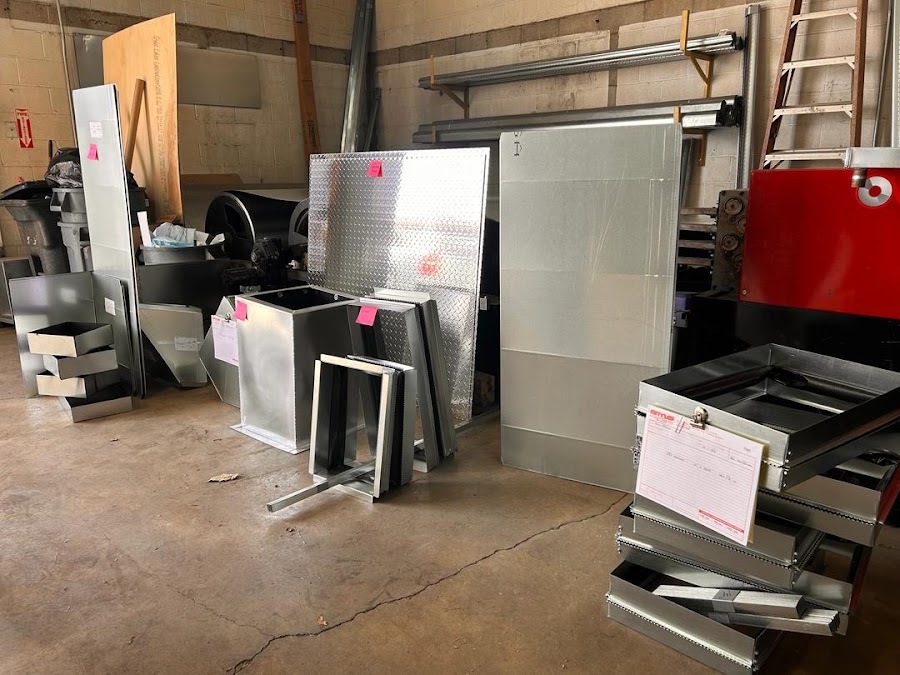
HVAC and mechanical. Enclosures, access panels, equipment supports, and lightweight ductwork parts for commercial buildings. Rooftop units in particular gain from aluminum’s weather resistance.
Food service and processing. Aluminum cleans easily and is safe for food contact. That makes it a staple for equipment frames, counter supports, and vent parts in kitchens and processing plants.
Architectural and decorative. Panels, trim, sign brackets, and facade pieces for commercial and public buildings. When anodized right, aluminum holds its look for decades with little upkeep.
Industrial and OEM. Lightweight guards, covers, machine frames, and custom fixtures where less weight helps. Prototypes and production parts where aluminum’s ease of machining speeds up delivery.
Marine and outdoor. Boat hardware, dock parts, and outdoor structures. Aluminum outlasts painted steel in wet and freeze-thaw conditions, which is a real factor in central Ohio.
What to Look for in an Aluminum Welding Shop
Not every metal fab shop handles aluminum well. Here is what sets the good ones apart.
Cleanliness and contamination control. Steel dust on an aluminum part causes galvanic corrosion and weld failure. Shops that run steel and aluminum on the same bench risk this. Look for a shop with clear separation or tooling set aside for aluminum only.
Qualified welders. AWS D1.2 (Structural Welding Code, Aluminum) is the standard for structural aluminum work. It tests welders on specific joints, positions, and thicknesses. Even for non-structural jobs, the D1.2 skill set of oxide control, heat control, and filler selection means better welds.
Both TIG and MIG on hand. A shop with only one process will default to it no matter what. You want a team that picks the right method for the job.
Full in-house fabrication. Welding is usually just one step. Cutting, forming, welding, and finishing under one roof keeps tolerances tighter and lead times shorter.
Why Using a Local Columbus Shop Makes the Difference
Aluminum dents and scratches more easily than steel. Damage that barely matters on carbon steel can ruin the look and fit of an aluminum part. Using a local Columbus shop means shorter transit, less damage risk, and the chance to check parts in person before delivery.
For contractors running jobs across central Ohio, having a fab partner in the metro area cuts lead time and makes revisions quick and convenient.
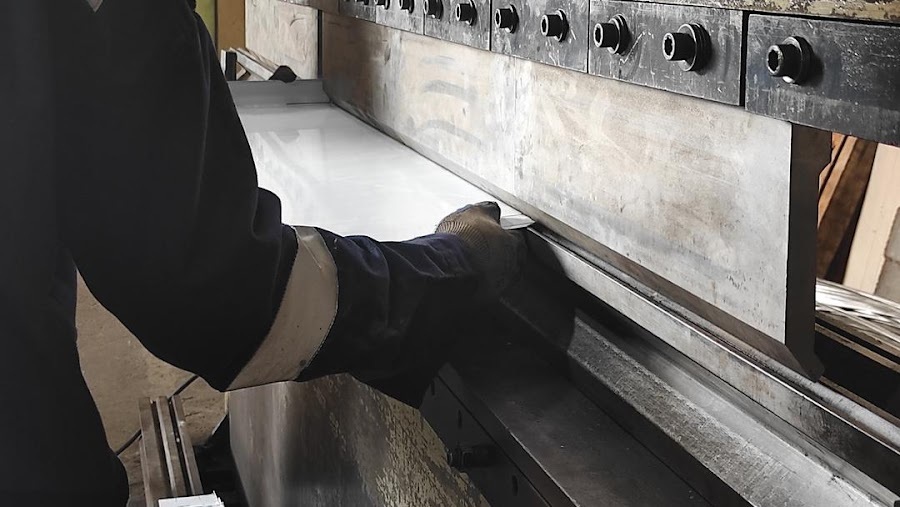
We build custom aluminum parts in-house at our Columbus facility. We handle CNC cutting, forming, welding, and finishing all under one roof. Whether you need one prototype or a full production run, we match the right process and filler to your job.
Get in touch or visit sheetmetalshopcolumbus.com to get your aluminum project quoted. In-house CNC and experienced welders mean precision work, fast turnaround, and parts built to your spec.
Frequently Asked Questions
Why is aluminum harder to weld than steel?
Aluminum forms an oxide skin that melts near 3,700°F while the base metal melts around 1,200°F, it moves heat about five times faster than carbon steel, and it gives no color change before it melts.
Should aluminum be TIG welded or MIG welded?
TIG suits sheet under 1/8 inch, exposed work, and repairs. MIG runs faster on structural joints over 3/16 inch and production work. We run both and match the process to the part.
What filler metal is used for aluminum welding?
4043 and 5356 cover most jobs. 4043 flows smoother and suits 6xxx alloys and service above 150°F. 5356 gives higher shear strength and color-matches under anodizing.
Do you weld aluminum to code?
AWS D1.2, the aluminum structural welding code, is the standard for structural work. It qualifies welders on specific joints, positions, and thicknesses.
Can you handle both prototypes and production runs?
Yes. We cut, form, weld, and finish in-house at our Columbus facility, so a single prototype and a full production run follow the same process.