Aluminum Fabrication in Columbus, Ohio: Why More Contractors Are Specifying Aluminum
Aluminum is one of the most versatile materials in commercial and industrial fabrication, and demand for custom aluminum components across central Ohio continues to grow. Whether you are specifying lightweight HVAC ductwork, corrosion-resistant architectural panels, or precision industrial enclosures, aluminum fabrication in Columbus, Ohio gives contractors and facility managers a material option that solves problems steel and galvanized simply cannot.
At The Sheet Metal Shop, we fabricate custom aluminum components for contractors, mechanical engineers, facility managers, and builders throughout the Columbus metro area. This guide covers when aluminum is the right call, what fabrication processes are involved, and how to get the most out of your next aluminum project.
When to Specify Aluminum Over Other Metals
Not every project calls for aluminum, and not every shop knows how to work with it properly. Aluminum earns its place when specific job conditions demand it:
Weight matters. Aluminum weighs roughly one-third as much as carbon steel. For rooftop HVAC installations, elevated ductwork runs, or projects where structural load is a concern, aluminum significantly reduces the weight your supports need to carry. Contractors working on older commercial buildings in the Columbus area — where roof decks were not engineered for heavy mechanical equipment — regularly specify aluminum ductwork and components to stay within structural limits.
Corrosion resistance is required. Aluminum naturally forms a protective oxide layer that resists corrosion without coatings or paint. This makes it the go-to material for outdoor installations, high-humidity environments, pool and natatorium ventilation systems, and any application where moisture exposure is constant. Unlike galvanized steel, which eventually loses its zinc coating in wet conditions, aluminum holds up for decades with minimal maintenance.
Appearance counts. Architectural and exposed applications often call for aluminum because it finishes cleanly — brushed, anodized, or powder-coated — and maintains its appearance over time. If the ductwork, panels, or components will be visible to building occupants or the public, aluminum delivers a polished, professional look that galvanized steel cannot match.
Food and beverage compliance. Certain food processing and commercial kitchen applications require non-ferrous materials. Aluminum meets these requirements while offering easier fabrication than stainless steel in many configurations.
Aluminum Alloys: Choosing the Right Grade for the Job
One of the most common mistakes contractors make when specifying aluminum is treating it as a single material. Different alloys have significantly different properties, and choosing the wrong one can mean premature failure or unnecessary cost.
3003 Aluminum is the most commonly used alloy in general sheet metal fabrication. It offers excellent formability, good corrosion resistance, and welds cleanly. For standard HVAC ductwork, flashing, trim, and general-purpose components, 3003 is typically the most cost-effective choice.
5052 Aluminum is stronger than 3003 and provides superior corrosion resistance, especially in marine and saltwater-adjacent environments. SMACNA standards reference 5052-H32 for ductwork applications where higher strength or environmental resistance is needed. It bends and forms well, though it requires more force than 3003.
6061 Aluminum is a structural alloy with high strength and good machinability. It is commonly used for brackets, frames, structural supports, and components that carry load. However, 6061 is more difficult to form into tight bends and is typically used in applications where structural performance outweighs formability.
At The Sheet Metal Shop, we work with all three alloys and can advise on the right grade for your specific application. Getting the alloy selection right from the start prevents costly rework and ensures the finished component performs as intended.
Custom Aluminum Fabrication Processes
Aluminum fabrication requires different techniques and equipment settings than steel. Not every sheet metal shop has the tooling, experience, or welding certifications to produce quality aluminum work. Here is what goes into a properly fabricated aluminum component:
CNC Cutting and Forming. Our CNC plasma and precision cutting equipment produces clean, accurate cuts in aluminum sheet and plate. Unlike manual cutting, CNC operations eliminate the heat distortion and rough edges that can compromise fit-up in the field. Press brake forming on aluminum requires adjusted tooling and tonnage settings — aluminum springs back differently than steel, and experienced operators compensate for this to hit dimensional targets on the first bend.
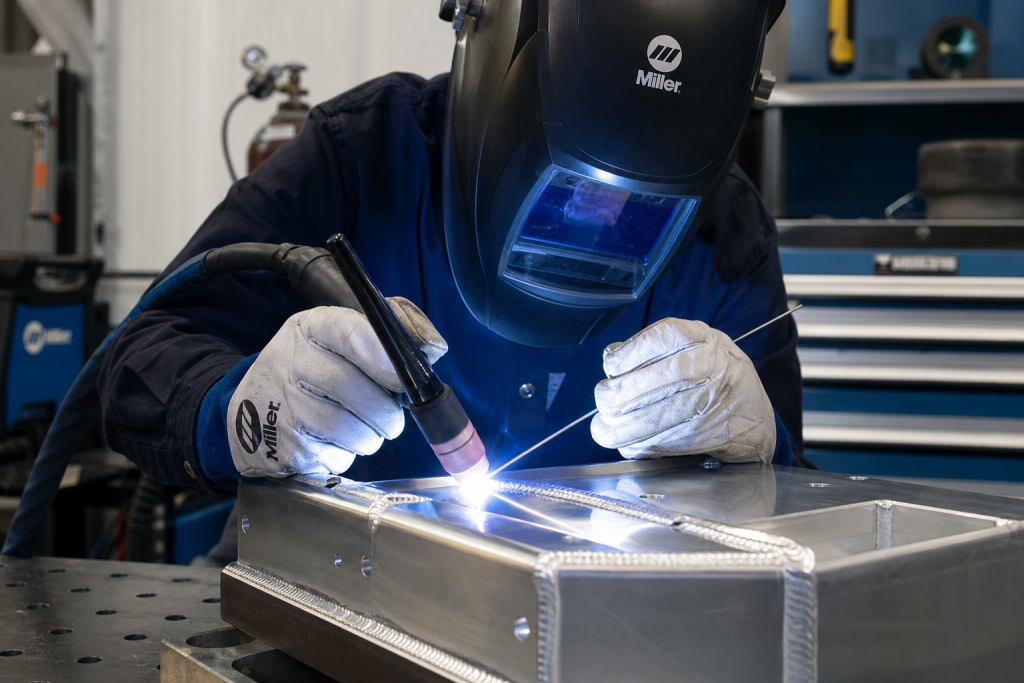
TIG Welding. Aluminum welding is where many shops fall short. Aluminum requires TIG (GTAW) welding with proper shielding gas, clean material preparation, and welders who understand the material’s thermal conductivity. Aluminum conducts heat roughly five times faster than steel, which means weld technique, heat input, and travel speed all require adjustment to prevent burn-through, warping, or weak joints. At The Sheet Metal Shop, our welders have extensive experience with aluminum TIG welding across a range of alloys and thicknesses. Every aluminum weld joint is inspected for proper penetration, appearance, and structural integrity before the component leaves the shop.
Finishing and Surface Treatment. Aluminum components can be delivered raw, brushed, anodized, or powder-coated depending on the application. For architectural installations where appearance matters, we coordinate finishing requirements upfront so the fabrication process accounts for coating thickness tolerances and masking needs.
Common Applications in Central Ohio
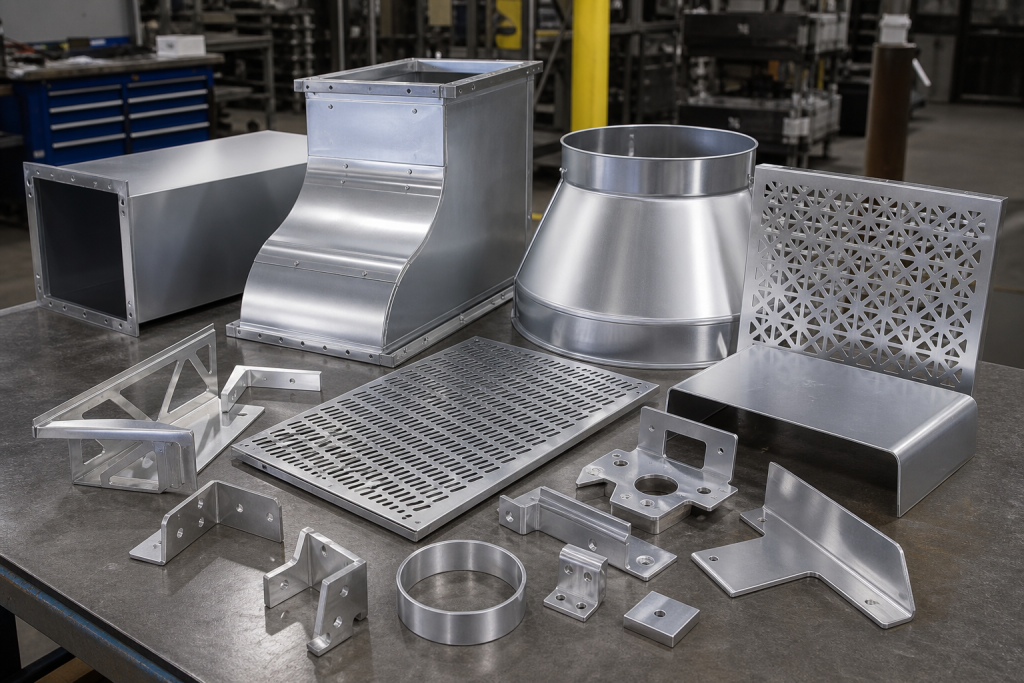
Aluminum fabrication serves a wide range of industries and project types across the Columbus metropolitan area. Here are the applications we see most frequently:
HVAC Ductwork and Components. Lightweight ductwork for rooftop units, exposed spiral duct in open-ceiling designs, and transition pieces where weight reduction matters. Aluminum duct is also specified for pool and spa ventilation systems where chlorine-laden air would corrode galvanized steel.
Architectural Panels and Trim. Custom copings, fascia, wall panels, column covers, and decorative elements for commercial buildings. Columbus has seen significant growth in mixed-use and commercial construction, and architects frequently specify aluminum for its clean lines and long-term durability.
Equipment Enclosures and Guards. Lightweight enclosures for rooftop electrical and mechanical equipment, access panels, and machine guards where corrosion resistance or weight is a factor.
Food Service and Processing. Hoods, ventilation components, and equipment enclosures for food processing facilities, commercial kitchens, and breweries that need non-ferrous fabrication.
Industrial Components. Custom brackets, mounting plates, chutes, and specialized components for manufacturing facilities across central Ohio’s industrial corridor.
Why Local Aluminum Fabrication Matters
Aluminum is lighter than steel, but it is also more susceptible to damage during shipping. Dents, scratches, and edge damage from long-distance transit can turn a precision-fabricated component into scrap before it reaches the job site. Working with a local fabrication shop in Columbus means shorter delivery distances, fewer handling transfers, and the ability to inspect components before they leave the shop.
Local fabrication also means faster turnaround. When a project timeline shifts or a field measurement comes back different from the original drawings, a Columbus-based shop can turn revisions in days rather than weeks. The Sheet Metal Shop regularly delivers rush orders for contractors working under tight deadlines — our in-house CNC equipment and experienced team allow us to respond quickly without sacrificing quality.
And when a contractor needs to walk through a complex fabrication with the shop team — reviewing drawings, discussing tolerances, or inspecting a first article — having a local partner makes that collaboration straightforward.
Get a Quote on Custom Aluminum Fabrication
Whether you are specifying aluminum for the first time or need a shop that can handle complex aluminum work reliably, The Sheet Metal Shop is equipped and experienced to deliver. With CNC precision cutting, expert TIG welding, full in-house production, and over 50 years of combined fabrication experience, we produce aluminum components that fit right and hold up.
Contact us today to discuss your aluminum fabrication project. Call The Sheet Metal Shop (614) 989-6835 or visit sheetmetalshopcolumbus.com to request a quote. We serve contractors, facility managers, and builders throughout Columbus, Ohio and the greater central Ohio region.