

An HVAC flexible duct connector is the short band of fabric between a fan or air handler and the sheet metal duct it feeds. Most people in the trade call it a canvas duct connector. If you manage a building in central Ohio, it’s a small part of your air system, but a torn one can leak air, add noise, and spread dust through your ductwork.
This guide is for facility managers. It covers what the connector does, the signs it has failed, and your options when it’s time to replace it. We supply canvas connectors and build the duct on either side of them in our Columbus shop, so we also list what to measure before you call us.
What a Flexible Duct Connector Does
A fan or air handler vibrates when it runs. If the duct bolts straight to the unit, that vibration travels down the sheet metal and into the building, and you hear it as a hum or rattle in the rooms the duct serves.
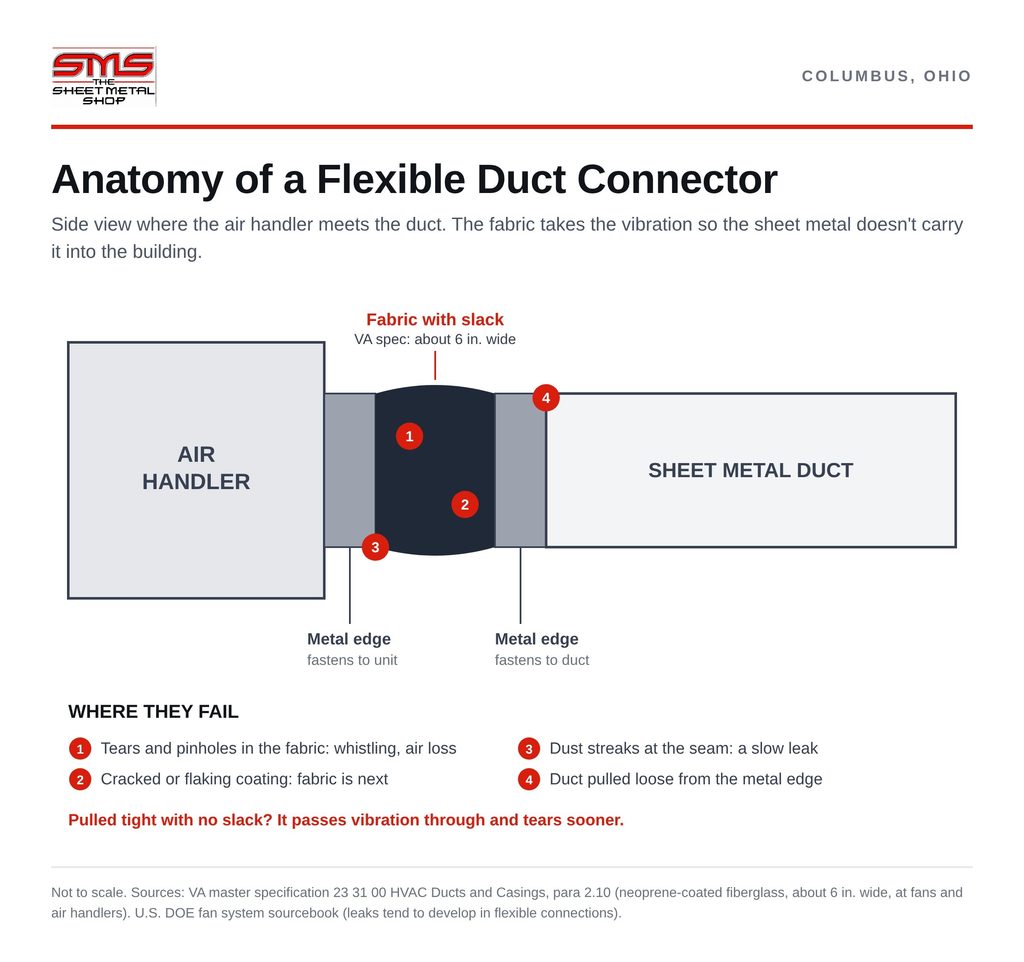
Connector manufacturers describe the part as an air-tight flexible joint: a strip of fabric secured to sheet metal on both sides, set between the equipment and the duct to isolate vibration and noise at the source. The metal edges attach to the unit on one side and the duct on the other. The fabric in the middle absorbs the movement. Supply houses also sell them as flex connectors or duct connectors.
The VA master specification for HVAC ducts calls for this kind of flexible connection wherever ducts connect to fans, air terminal units, and air handling units. It specifies a non-combustible connection of 29-ounce neoprene-coated fiberglass fabric about 6 inches wide.
Don’t confuse the connector with flex duct. Flex duct is round, insulated, flexible duct that runs from a trunk line to a diffuser. A flexible connector for duct work is a short joint at the equipment, and it isn’t meant to carry air any distance.
Signs Your Canvas Connector Has Failed
The fabric wears out before the metal around it. It flexes when the fan starts and stops, and it sits in the air stream for years. The U.S. Department of Energy’s fan system sourcebook notes that leaks tend to develop in flexible connections and in parts of a system with high vibration.
Walk your mechanical rooms and rooftop units, and look for these signs:
| What you see or hear | What it usually means |
|---|---|
| Tears, holes, or split seams in the fabric | The fabric has worn through and is leaking air |
| Whistling or hissing near the unit | Air is escaping through a gap or pinhole |
| Dust streaks or dark lines on the fabric or nearby metal | Air has been leaking through that spot for a while |
| Fabric pulled tight with no slack | The connector can’t absorb vibration and will tear sooner |
| Stiff, cracked, or flaking coating | The coating has aged out and the fabric is next |
| Duct pulled loose from the metal edge | The fasteners or the metal lock have failed |
A failed connector will end up costing you in two ways. The DOE sourcebook says system leaks degrade fan performance and increase operating costs, and that leakage reduces the air delivered to the point of service. The same source says one of the first steps in troubleshooting a system with declining performance is to check the integrity of the ductwork. If a zone has lost airflow, check the connector before you assume the fan or the controls are at fault.
On the return side, a torn connector pulls in unfiltered air from the mechanical room. That dust then ends up on the coil and in the supply duct.
Choosing the Right Connector Fabric
Connector fabrics differ by coating and base fabric, and each one has its own temperature rating. Neoprene-coated woven fiberglass is a common choice for indoor air handlers. One manufacturer lists a continuous temperature range of -40°F to 200°F for its neoprene-coated fiberglass fabric. Other fabrics and brands carry different ratings, so check the data sheet for the one you buy.
When you choose a replacement, match these points:
- Temperature. The fabric’s rating has to cover the air temperature in the duct and the conditions around the unit.
- Location. A rooftop unit puts the connector in sun, rain, and cold. Ask for a fabric rated for outdoor use.
- Project spec. Some specs call for a fabric weight or type by name, like the VA’s 29-ounce neoprene-coated fiberglass. Follow the spec on a job that has one.
- Fire rating. Your mechanical engineer or code official sets the fire performance the connector needs. Ask before you substitute a fabric.
A neoprene flexible duct connector and a vinyl flexible duct connector can look alike from a ladder. If you need the exact match, read the label on the old fabric or send us a photo of it.
Your Replacement Options
You have two main ways to replace a failed connector.
Prefabricated connector. A rectangular flexible duct connector comes with the fabric already locked into galvanized steel edges. It installs between the duct and the unit like a short section of duct. This is the fastest swap when the opening is a standard size.
Fabric cut from a roll. A flexible duct connector roll has the fabric and metal edges joined in a long strip. The installer cuts it to length, wraps it around the opening, and joins the ends at a corner. This works for odd sizes and round openings.
For either option, the connector should go in with a little slack so the fabric can move. A connector stretched tight passes vibration straight through and tears sooner. It also can’t make up for duct that doesn’t line up with the unit. If the duct is offset, the duct needs a transition or new fitting, and the connector should only handle vibration.
Sometimes the problem is bigger than the fabric. If the metal edges are rusted, the duct collar is bent, or the duct no longer lines up with the unit, we can build new duct fittings to match.
Canvas Connectors From Our Columbus Shop
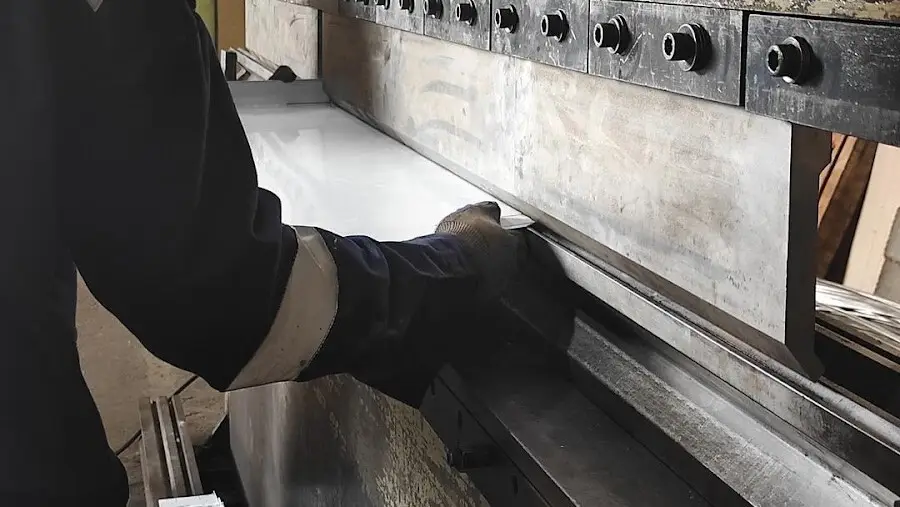
We supply canvas connectors and build the sheet metal around them in-house at our shop on Clara Street. We cut parts on our CNC plasma table and form them on our press brake, so a new collar, transition, or duct section can be built along with the connector. See our canvas connector page for more on these duct systems parts.
Before you call, measure and photograph:
- the width and height of the opening, or the diameter if it’s round
- the length of the connector from the unit to the duct
- the unit type (air handler, rooftop unit, exhaust fan) and where it sits
- the fabric label or a close photo of the old fabric
- the condition of the metal edges and the duct next to them
If you’re replacing the supply plenum at the same time, our post on HVAC plenum fabrication covers what to measure for that job.
Frequently Asked Questions
How long does a canvas connector last?
There’s no fixed life. Heat, sun, vibration, and how tight the fabric was installed all affect it. Check the connectors when you change filters, and replace any that show tears, leaks, or a cracked coating.
Can I tape a torn canvas connector?
Tape can slow a leak for a short time, but the fabric keeps flexing and the tape works loose. Replace the connector as soon as you can.
Is a canvas connector the same as flex duct?
No. Flex duct is round, insulated duct that runs to a diffuser. A canvas connector is a short fabric joint between the equipment and the sheet metal duct.
Why does my air handler hum through the ductwork?
A connector that’s torn, stretched tight, or missing can let fan vibration travel into the duct. Have it checked along with the fan and its mounts.
What should I send for a replacement quote?
Send the opening size, the connector length, the unit type, and photos of the old connector and the duct around it.
Replace a Worn Connector Before It Fails
A new flexible duct connector keeps fan noise out of your rooms and keeps the air you pay to move inside the duct. It saves your maintenance team hours of chasing airflow complaints and protects your equipment from dust pulled in through a torn return. We’re an R-Stamp certified shop at 1588 Clara Street, serving facility teams and contractors across central Ohio.
Call (614) 989-6835 or request a quote and send us your measurements and photos.