Galvanized vs Stainless Steel vs Aluminum: Choosing Sheet Metal Materials in Columbus, Ohio
Most quote requests that come across our bench already name the material desired. Sometimes it is the right call. Often the spec was copied from the last job, and the part is headed somewhere different: a wash-down room, a rooftop, a duct run carrying moist exhaust. The galvanized vs stainless steel question, with aluminum as the third option, dictates what the part costs, how long it lasts, and how fast we can get it on your truck.
We fabricate in all three materials every week at our Columbus, Ohio shop, so we see which choices hold up in central Ohio buildings and which ones come back for repair. Here is how we think through material selection, plus what we ask before we cut.
Galvanized steel: the default for a reason
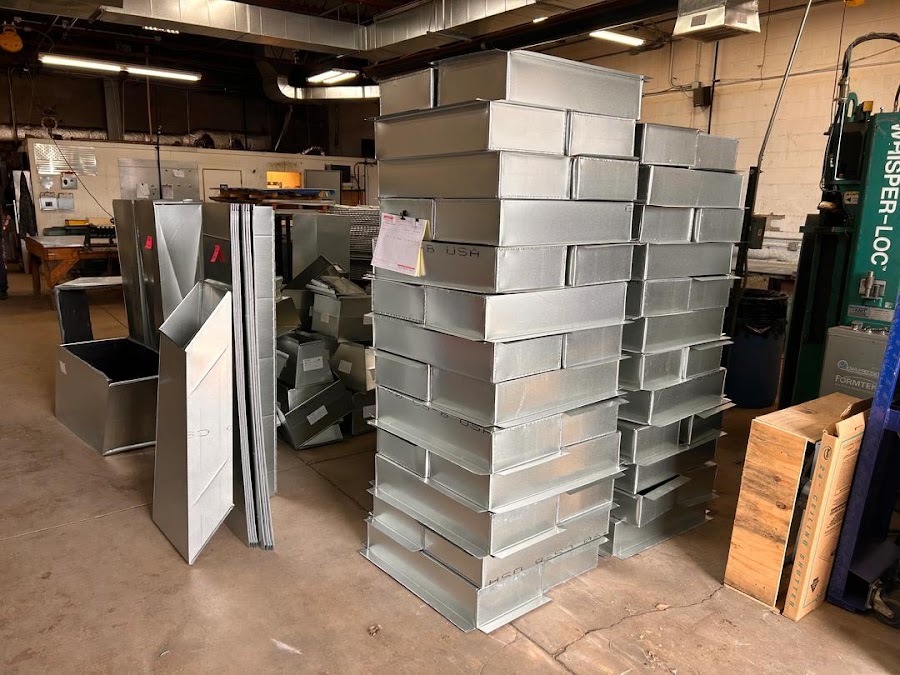
Galvanized sheet is carbon steel with a hot-dip zinc coating, and it handles the majority of the HVAC and general fabrication work we do. The coating designation tells you how much zinc you get: G90 means at least 0.90 ounces of zinc per square foot across both sides of the sheet, per ASTM A653, and G60 gives you two thirds of that. G90 is the standard call for commercial duct and rooftop-adjacent parts. G60 is fine for interior work in dry, conditioned space.
Galvanized steel wins on cost and availability. We stock common gauges, so a plenum, a transition, or a set of fittings can go from drawing to finished part without waiting on a mill order. It forms well on the press brake, it takes screws and cleats, and it seals with standard duct sealant.
The limits matter. Zinc is a sacrificial coating, and once you cut, drill, or weld the sheet, you have exposed bare steel at every edge. If there is continuous service above 392 degrees F, the coating will start to fail, since the outer zinc layer separates from the zinc-iron alloy underneath at that point. Above roughly 480 degrees F, galvanized should not be used at all. Welding galvanized also burns off zinc and produces zinc oxide fume, which is a ventilation and PPE issue in the shop and in the field. When your part is going into heat, chemicals, or steady moisture, galvanized is the wrong material to choose.
Stainless steel: buy it when the environment demands it
Stainless steel has a higher price, and becomes worth it in three situations: food and beverage contact, wash-down and sanitation areas, and grease or high-heat exhaust. If your part needs to be cleaned with chemicals every day, or it will sit in a kitchen, brewery, lab, or processing area, stainless is the honest answer.
Grade choice comes next, and the galvanized vs stainless steel decision usually ends here with one of two numbers. Type 304 is the workhorse. It is commonly used in commercial kitchens, food equipment, indoor enclosures, architectural panels. Type 316 adds molybdenum, which buys real resistance to chlorides and aggressive chemicals, and it typically runs 20 to 40 percent more than 304 on material cost. Choose 316 for demanding environments: pools and natatoriums, chemical processing, salt exposure, and medical or lab work. The difference between the two grades shows up in service, not on the shop floor. Choose 304 everywhere else, because the two grades form and weld about the same on our floor.
Finish is part of the spec, not an afterthought. A #4 brushed finish is standard for visible kitchen and architectural work. A 2B mill finish is fine for concealed parts and costs less. Tell us which one you need and whether the grain direction matters, because that changes how we lay out and nest the part.
Fabrication cost also runs higher with stainless. It work-hardens, it needs dedicated tooling and separate handling to avoid carbon contamination, and it takes more time on the brake and in the weld booth. You should budget for that labor in addition to the sheet price.
Aluminum: light, corrosion resistant, alloy sensitive
Aluminum weighs roughly a third of steel, it will not rust, and it holds up outdoors without coating or paint. That combination is why we see it on architectural trim, rooftop enclosures, wash-down guards, and any part that a crew has to lift into place by hand.
Alloy selection does more work here than most specs admit:
- 3003 is the economy former. Soft, cheap, very formable, highly corrosion resistant, and the usual pick for ductwork, panels, and utility enclosures where strength is not the point. Sheet availability is thinner than the other two, so confirm stock before you commit.
- 5052 is the aluminum sheet metal workhorse. Good formability with the best corrosion resistance of the three, especially in salt and weather exposure. Typical ultimate tensile is around 34 ksi in H32 temper. This is our default for formed outdoor parts.
- 6061-T6 is the structural alloy, roughly twice as strong as 5052-H32 at about 45 ksi tensile. It carries load and machines well, but it does not like tight bends and will crack if you push the radius. It also anodizes cleanly.
Two costs surprise people. Aluminum sheet often prices above galvanized for the same gauge, and aluminum welding takes more skill and different equipment than steel, which we cover on our aluminum welding page. Code also rules aluminum out of some jobs. For commercial grease duct, NFPA 96 calls for 16 gauge carbon steel or 18 gauge stainless, for example.

Side by side, the way we compare them on a quote
| Factor | Galvanized steel | Stainless steel | Aluminum |
|---|---|---|---|
| Relative material cost | Lowest | Highest | Middle to high |
| Fabrication labor | Lowest | Highest | Middle |
| Corrosion resistance | Good until the coating is cut or heated | Excellent, strongest with 316 | Excellent without coating |
| Heat tolerance | Poor above 392 F | Best of the three | Poor, softens early |
| Weight | Heavy | Heavy | About one third of steel |
| Cleanability | Fair | Best, sanitary surfaces | Good |
| Typical use | HVAC duct, fittings, guards, brackets | Kitchens, labs, grease duct, wash-down | Architectural trim, rooftop and outdoor parts |
Read that table against the actual service conditions, not just the building type. A restaurant has stainless in the hood and galvanized in the supply duct twenty feet away, and both are correct.
Questions we ask before we pick a material with you
You do not need a finished material spec to get a quote from us. You need answers to five things, and we can work the rest:
- Where does the part live? Indoor conditioned, unconditioned, rooftop, wash-down, or outdoors.
- What touches it? Air, water, grease, food, chemicals, or a cleaning agent, and how often.
- How hot does it get? Anything above 392 degrees F rules out galvanized on the spot.
- Does it carry load, and who lifts it? Load points to 6061 or heavier gauge steel. A hand-carried part points to aluminum.
- Is it visible? Visible parts need a finish call and a grain direction, and that affects layout.
Answer those and we will tell you which material we would cut, what it changes on price, and what it changes on lead time. If a cheaper material works for your conditions, we say so. We would rather quote the part that lasts than the part that comes back for repairs.
Why the material call goes better with a local shop
We run our own CNC plasma cutting, forming, and welding in house at our Columbus shop. Material selection is not a phone call to a subcontractor. Our fabricators handle galvanized, stainless, and aluminum on the same floor, and they know which combinations cause problems: mixed metals in contact, galvanized fasteners against aluminum or stainless, welded galvanized in an occupied space, aluminum specified where code will not allow it.
That also protects your schedule. Central Ohio contractors deal with tight construction windows, and a material substitution decided on Monday should not cost you a week. When we already stock the sheet and we cut it here, a change of material is a change of plan, not a change of vendor. Choosing the right material with us up front saves your crew rework in the field and keeps your install date safe.
Call us or send your drawings through sheetmetalshopcolumbus.com and we will price the part in the material that fits the job, so you protect the budget and save the rework.
FAQ
Is galvanized or stainless steel better for ductwork?
Galvanized handles standard supply, return, and exhaust duct at lower cost. Stainless is the right call for welded grease and industrial duct, moist or corrosive exhaust, and any duct that gets cleaned with chemicals. For commercial grease duct, NFPA 96 calls for carbon or stainless steel instead of aluminum.
Can you weld galvanized steel?
We can, and we do when the design calls for it, but welding burns the zinc off the weld area and creates zinc oxide fume. That means ventilation and PPE in the shop, plus touch-up on the exposed steel. When a part needs continuous welding, carbon steel or stainless is usually a better fit.
How much more does stainless cost than galvanized?
Both the sheet and the labor run higher, and the gap changes with grade, gauge, and mill pricing at the time of the order. Type 316 typically carries a 20 to 40 percent material premium over 304. We quote current pricing on every job rather than working from a stale multiplier.
Will aluminum work for a rooftop enclosure in Ohio?
Usually yes. Aluminum resists corrosion without coating, it survives freeze and thaw cycles, and its low weight makes rooftop handling easier. Use 5052 for formed weather-exposed parts, and 6061-T6 when the enclosure carries load.
Do I need to know the alloy or grade before I request a quote?
No. Tell us where the part goes, what it contacts, how hot it gets, and whether it is visible. We will recommend the material and grade, then explain the cost and lead time difference before you approve anything. That call protects your budget and keeps your install date safe. Call us for a quote.