Custom Stainless Steel Fabrication in Columbus, Ohio: A Guide for Contractors and Facility Managers
If your project calls for corrosion resistance, sanitary surfaces, or a polished finished product that holds up for decades, you are looking at stainless steel. And if you are sourcing custom stainless steel fabrication in Columbus, Ohio, there are things worth knowing before you spec out your next order — from grade selection and fabrication methods to lead times and what separates a reliable shop from one that will cost you callbacks.
This guide is written for the contractors, facility managers, mechanical engineers, and builders across central Ohio who need stainless components built to spec — not pulled off a shelf.
Why Stainless Steel Demands a Specialized Fabricator
Stainless steel is not just “nicer-looking mild steel.” It behaves differently under the brake, the shear, and the welder. Its lower thermal conductivity means heat stays concentrated during cutting and welding, which can cause warping, discoloration, and a condition called sensitization — where the grain structure breaks down and the material loses its corrosion resistance in the affected zone.
That is why stainless steel sheet metal fabrication requires tighter process control than carbon steel or galvanized work. Feed rates, amperage, shielding gas, and even the order of operations matter. A fabricator who runs stainless the same way they run galvanized will deliver parts that look fine at first but corrode prematurely or warp under load.
At Sheet Metal Shop in Columbus, stainless steel is not an afterthought. It is a core material in our production flow, handled by fabricators who understand how it moves, how it welds, and how to maintain the finish and integrity your project demands.
Grades That Matter: 304 vs. 316 and When Each One Fits
Not every stainless project requires the same alloy. The two grades you will encounter most often in custom fabrication are 304 and 316, and choosing the right one comes down to where the finished piece will live.
304 Stainless Steel is the workhorse. It offers excellent corrosion resistance in most indoor and sheltered environments and is the standard choice for:
- Commercial kitchen equipment and food-contact surfaces
- HVAC components in clean or mildly corrosive environments
- Architectural trim, wall panels, and backsplashes
- Medical and laboratory enclosures
- General-purpose covers, brackets, and housings
Grade 304 is also the more cost-effective option and easier to form and weld, which keeps fabrication costs in check for large-volume orders.
316 Stainless Steel adds molybdenum to the alloy, giving it significantly better resistance to chlorides, salt, and harsh chemical exposure. It is the right call for:
- Exterior installations exposed to road salt or deicing chemicals — a real consideration across central Ohio
- Pharmaceutical and chemical processing equipment
- Marine or waterfront applications
- Environments with frequent washdown using chlorinated cleaners
- Components exposed to acidic or high-humidity conditions
If you are not sure which grade to specify, your fabricator should be asking about the installation environment before quoting. If they are not asking, that is a red flag.
Common Applications Across Central Ohio
Columbus is in the middle of a construction surge. Billions of dollars in commercial, industrial, and institutional projects are underway or breaking ground across the metro — from advanced manufacturing campuses to downtown mixed-use developments. Custom stainless steel fabrication in Columbus, Ohio, touches a wide range of those projects.
Food Service and Commercial Kitchens. Stainless steel is the industry standard for food-contact surfaces, and for good reason — it resists bacterial growth, handles repeated sanitization, and meets health department requirements. Custom-fabricated prep tables, splashguards, drip pans, hood liners, and wall panels are common orders from restaurant buildout contractors and institutional kitchen renovators across the Columbus area.
Healthcare and Laboratory Facilities. Hospitals, clinics, and research labs across central Ohio require stainless enclosures, equipment housings, and cleanroom components. These projects often carry tight tolerances and require a fabricator with CNC capability — not just hand-brake work.
Brewing, Distilling, and Beverage Production. Columbus has a thriving craft brewing scene, and stainless steel is the material of choice for tanks, ductwork, splash guards, and production-area surfaces. Grade 316 is often specified for direct contact with acidic or fermented liquids.
Architectural and Interior Design. Custom stainless panels, column wraps, elevator surrounds, and decorative trim are showing up in more Columbus-area commercial interiors and mixed-use developments. These pieces require precise forming and a clean finish — often a No. 4 brushed or mirror polish.
Industrial and Manufacturing. Guard panels, machine enclosures, ductwork for corrosive exhaust, drip trays, and custom brackets for production lines. Facility managers at Columbus-area plants order these components regularly to maintain operations and meet safety requirements.
What to Expect from the Fabrication Process
If you have not ordered custom stainless before, here is how it typically works with a shop that handles the full process in-house.
1. Specification and Drawing Review. You provide dimensions, material grade, gauge, finish requirements, and any relevant drawings or sketches. A good fabricator will review these with you and flag potential issues — like a bend radius that is too tight for the gauge you specified, or a weld location that will be visible and needs a specific finish treatment.
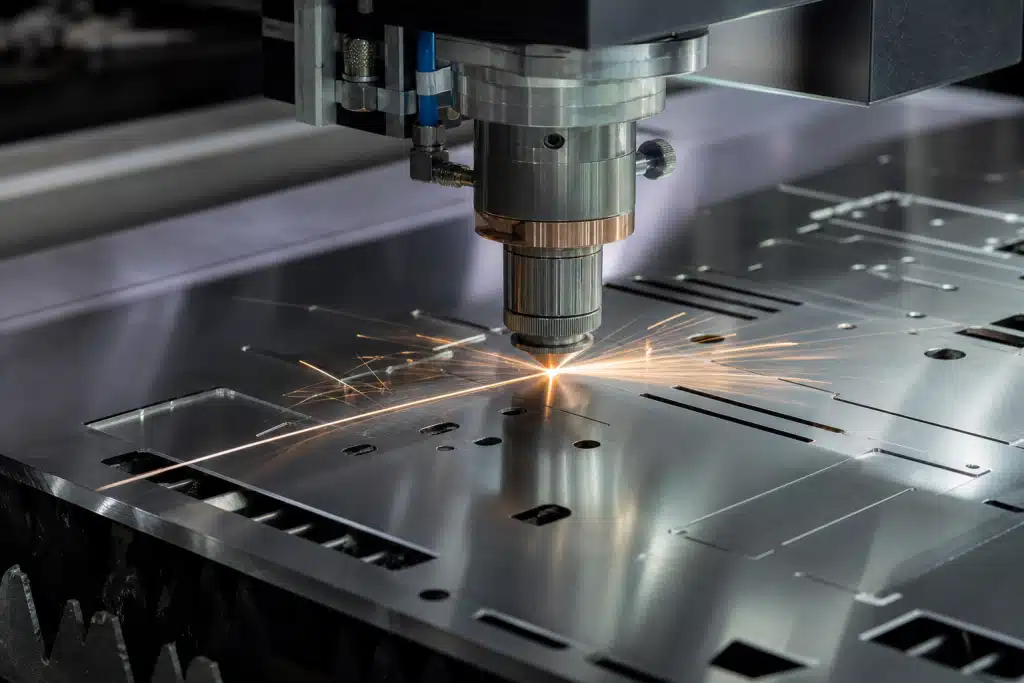
2. Material Sourcing and Cutting. The shop sources the correct grade and gauge of stainless sheet stock. At Sheet Metal Shop, we use CNC cutting equipment for precision parts, which means cleaner edges, tighter tolerances, and faster production than manual methods.
3. Forming and Bending. Stainless steel work-hardens as it is formed, so brake settings and tooling must be calibrated for each grade and thickness. Our team adjusts for springback — stainless bounces back more than mild steel after bending — to hit your angles precisely.
4. Welding and Finishing. TIG welding is the standard for stainless sheet metal because it produces clean, controlled welds with minimal heat distortion. After welding, seams are ground, blended, and polished to match the surrounding surface. The finish you specify — No. 4 brushed, No. 2B mill, or mirror — is maintained or restored after fabrication.
5. Quality Check and Delivery. Every piece is inspected for dimensional accuracy, weld integrity, and surface quality before it ships. For contractors working on tight install schedules, this step is non-negotiable — rework in the field on stainless is expensive and often visible.
Why In-House Production Matters
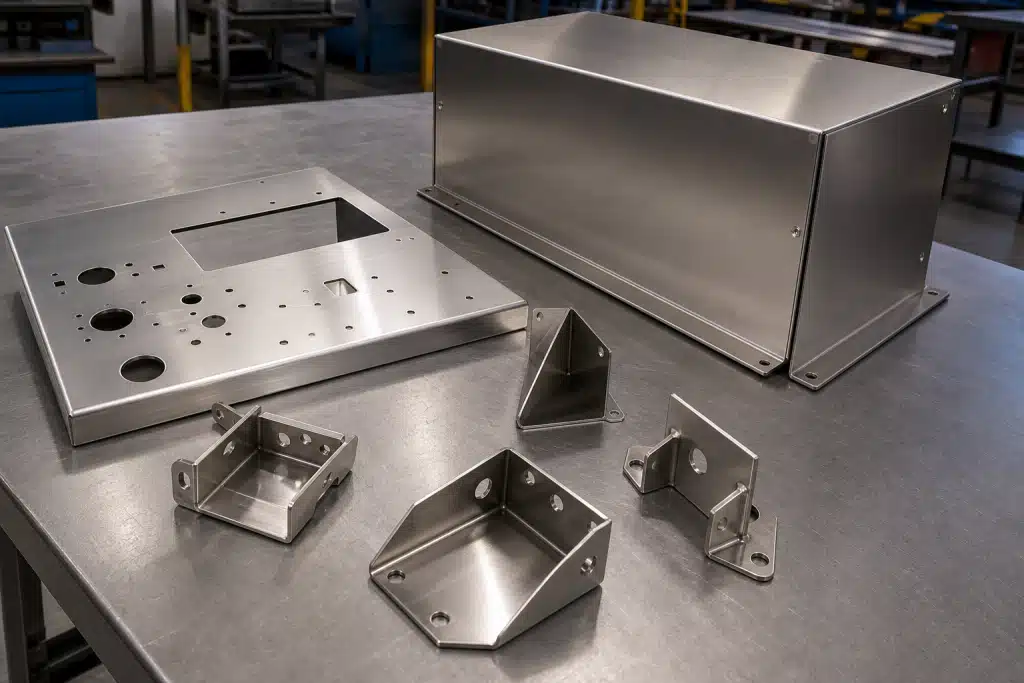
Here is something that catches contractors off guard: not every fabrication shop actually fabricates. Some are brokers — they take your order, send it to another facility (sometimes out of state), and add their margin. That is fine until you need a revision, a rush, or a question answered about how a piece was made.
Sheet Metal Shop runs everything in-house at our Columbus facility. CNC cutting, forming, welding, and finishing all happen under one roof, managed by the same team from start to delivery. That means:
- Faster turnaround. No shipping parts to a subcontractor and waiting for them to get to your job. Our production schedule is our own.
- Direct communication. When you call with a question or change order, you are talking to the people making your parts.
- Consistent quality. We control every step. There is no variability introduced by a third-party shop running your job between their other customers.
- Easier reorders. We keep records of past jobs. When you need the same piece again — or a modified version — we can pull it up and run it without starting from scratch.
For contractors managing multiple trades on a jobsite, that kind of reliability matters. You do not want your sheet metal delivery to be the unknown variable in your schedule.
Choosing a Stainless Steel Fabrication Partner in Columbus
If you are evaluating stainless steel fabrication services in Columbus, here are the questions worth asking:
- Do you fabricate in-house, or do you outsource? Know where your parts are actually being made.
- What stainless grades do you stock or regularly source? A shop that works with stainless daily will have established supply relationships and better pricing.
- What is your CNC capability? CNC cutting and forming produce tighter tolerances and more repeatable results than manual-only shops.
- Can you match a specific finish? If your project requires a No. 4 brushed finish or a mirror polish, the fabricator needs to confirm they can deliver it consistently.
- What are your current lead times? Summer is peak construction season in Columbus, and lead times can stretch. A shop with dedicated capacity gives you a more reliable timeline.
Get a Quote on Custom Stainless Steel Fabrication
Sheet Metal Shop has served contractors and facility managers across the Columbus metro for over 50 years. Whether you need a single custom component or a production run of stainless panels, our in-house CNC capability and experienced fabrication team deliver precision work on your timeline.
Contact us for a quote on your next stainless steel project. Call or visit sheetmetalshopcolumbus.com to get started.